Invited strand
Download PdfThe Iberian Crossroads: Networks of Exchange, Mobility, and Influence in the Medieval World
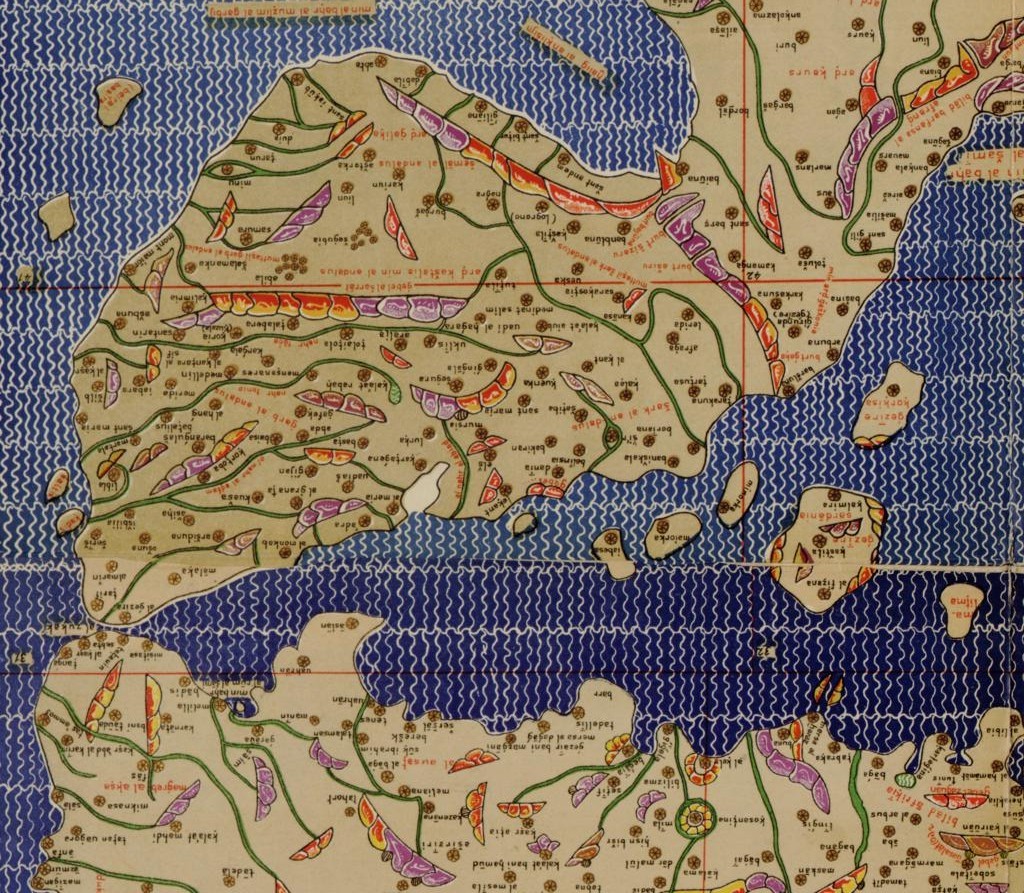 https://www.loc.gov/resource/g3200.ct001903/?r=0.729,0.156,0.384,0.17,0
The Iberian Peninsula occupied a unique position in the medieval Mediterranean and European worlds –a space of encounter, translation, and circulation where diverse cultures, religions, and political powers intersected. This strand explores the dynamic networks that connected Iberia to broader medieval contexts, examining how people, ideas, objects, texts, and practices moved across geographical, linguistic, and confessional boundaries.
Moving beyond static notions of cultural contact, we emphasize movement and agency: the circulation of knowledge through translation and intellectual exchange; the mobility of religious communities, pilgrims, hagiographic traditions and the cult of saints across borders, and Jewish-Christian-Muslim dialogues; the flow of goods, technologies, and artistic forms through trade networks; and the transfer of political ideas and diplomatic practices. We welcome papers that examine these connections from multiple perspectives –whether focusing on Christian, Jewish, or Islamic contexts, or exploring the spaces where these traditions overlapped and interacted.
This strand brings together scholars working across disciplines and methodologies –from history and philology to art history, religious studies, and archaeology– to consider how medieval Iberia both shaped and was shaped by its connections to the wider world. We invite contributions that address specific case studies of exchange and transfer, theoretical reflections on connectivity and networks, or comparative approaches that situate Iberia within broader Mediterranean or European frameworks.
Potential topics include, but are not limited to:
- Intellectual networks and the translation of knowledge
- Religious mobility: pilgrimage, mission, hagiographic traditions and the cult of saints across borders and interreligious debates
- Economic exchange and the circulation of material culture
- Diplomatic relations and political networks
- Manuscript circulation and textual transmission
- Scientific and medical knowledge transfer
- Artistic and architectural influences
- Migration, exile, and diaspora communities
- Cross-confessional interactions and coexistence
Coordinators: Isaac Lampurlanés and Clara Renedo (Universitat de Lleida).
Keynote Speakers:
Thursday 4th June
09:00h. Nikolas Jaspert (Universität Heidelberg), 'Jo vos contaré largament tot les miracles que aure vist' – viatgers peninsulars al centre d'Europa
12:00h. Matthias M. Tischler (Universitat Autònoma de Barcelona), Unity and Diversity: How Euro-Mediterranean Knowledge Networks Transformed the Post-Visigothic World (800–1200 CE)